
How to become a magician: the full path, from first trick to first paid gig
By Maxime Henry·· 12 min read
Becoming a magician is a dream many people have carried since childhood, and it’s far more within reach than you think. In this guide I give you the full path, step by step: what “being a magician” really means, how to go from your first tricks to a real act, the qualities that make the difference, the question of degrees and age, and how to land your first paid gigs if you want to do it for a living. And if you want to become a professional magician, I’ll introduce the one-year mentoring program I run with Hiro, one of the best magicians in France today.
How to become a magician: the steps in short
If you’re wondering how to become a magician, here’s the path almost everyone who makes it follows. It works whether you just want to amaze your friends or want to make a living from magic one day.
- Learn the basics. A few simple tricks and then your first sleight of hand moves, in a logical order.
- Build a small repertoire. Three to five strong tricks you’ve really mastered, better than fifty half-learned ones.
- Practice with a method. Short, regular sessions, in front of the mirror and then in front of your phone.
- Show your tricks to real people. Your family, your friends, and then people you know less well.
- Put together a 10 to 20 minute act. A series of tricks that flow together, with a beginning, a middle and an end.
- Film yourself and ask for feedback. That’s how you improve fastest.
- Land your first gigs. A birthday, a wedding, a restaurant, a corporate party.
You don’t have to do it all at once. Each step prepares the next. And the good news is that the first one starts today, with a simple deck of cards.
What exactly does being a magician mean?
The word “magician” covers very different realities. Before you dive in, it’s worth knowing where you want to go.
Amateur, semi-pro or professional
Many magicians are amateurs: they do it for fun and show their tricks to friends, at parties, with family. That’s already a real passion, and many stay there, very happily.
Semi-pros have another job and do paid gigs now and then: birthdays, weddings, a few parties a month. It’s often the stage between the passion and the profession.
Professionals make a living from magic. They perform regularly and take care of their clients, their marketing and their gear. Being a magician is then a profession in its own right, with its artistic side and its business side.
The main types of magicians
- Close-up magic: magic at a very short distance, with cards, coins or everyday objects, often right under the spectator’s nose.
- Parlor magic: for a small group, in a living room or a small venue, with slightly more visible effects.
- Stage magic: a show for a seated audience, with effects designed to be seen from afar.
- Mentalism: creating the illusion of reading minds, predicting the future or influencing decisions.
- Magic for kids: shows where humor and participation count as much as the tricks.
- Corporate magic: gigs at parties, seminars or trade shows, often close-up, among the guests.
You don’t have to choose now. Most magicians start with cards and close-up, because that’s the simplest way in, and then find their style along the way. By the way, the word “illusionist” means the same thing: wondering how to become an illusionist means asking exactly the same questions.
How do you become a magician if you’re starting from zero?
It all starts with learning. I won’t repeat everything here, because I wrote a whole guide on the subject: how to learn magic on your own, with a plan for your first month. Here are the essentials.
Learn the basics
Start with tricks that work by themselves, with no secret moves. They give you confidence and teach you to present before you learn to handle cards. You’ll find several in my no sleight of hand magic tricks. After that, take on your first card techniques, one by one, with a good poker-size deck.
Build a repertoire of a few strong tricks
A magician isn’t judged by how many tricks they know, but by the ones they show. Choose three to five very different tricks: a prediction, a card that appears in an impossible place, a trick where the spectator does everything themselves. To choose your first ones, check out my selection of easy card tricks explained step by step.
Practice with a method
Fifteen or twenty minutes a day beats three hours on Sunday. Repeat the move slowly first, then at normal speed, then while you talk. And never show a trick until you can do it without thinking.
To find out which method to choose between a club, a school, books or online courses, I made a comparison in my article on choosing a magician course.
Free course7 easy, impressive pro tricks7 tricks explained on video, free, available right away. With an English voice.Get the free courseHow do you go from a few tricks to a real act?
This is the step that separates someone who “knows a few tricks” from someone who really is a magician.
Show your tricks to real people
The mirror doesn’t react; people do. Show your tricks to one or two people you trust, in a quiet place. You’ll discover things you never imagined: a spectator who doesn’t do what you expect, a joke that doesn’t land, a moment when everyone looks at your hands exactly when they shouldn’t. It’s normal, and it’s worth its weight in gold.
Put together a 10 to 20 minute act
An act is a series of tricks designed as a whole. Start with a short, visual effect to grab attention, put tricks where spectators take part in the middle, and save your strongest effect for the end. Each trick should set up the next one, with no dead time to put the deck back in order.
Start small. If you want a model, I explain how to put together a 5-minute mini show in my article on the most impressive magic tricks. Once those 5 minutes hold up on their own, you add a trick, then another, until you reach 10, 15, 20 minutes.
Film yourself
Put your phone where a spectator would be and do your full act. Then watch the video without mercy. Can you see something you shouldn’t? Are you talking too fast? Are you looking at your hands instead of the audience? It’s usually uncomfortable to watch, but it’s the most effective tool I know.
Ask for feedback
Ask your spectators what they liked most and when they tuned out. If you know other magicians, show them your act: they’ll spot the technical details. Both kinds of feedback are useful, but don’t forget that you perform for the audience, not for magicians.
What qualities do you need to be a good magician?
Tricks are only part of the craft. Two magicians can do exactly the same trick: one leaves the audience cold and the other makes them scream. This is where the difference lies.
Presentation
A trick is a secret plus a story. What you say and how you say it turn a simple card exercise into a magical moment. Write what you’re going to say, rehearse it and keep what gets a reaction.
A character
Over time, you’ll discover who you are on stage. Funny, mysterious, serious, eccentric: it doesn’t matter, as long as it comes naturally. A character that’s like you is easier to keep up and more believable for your audience.
Knowing how to speak and handle a group
A magician talks a lot. You have to know how to choose a spectator, give them clear instructions, hold the group’s attention and handle the one who wants to touch everything or guess the trick. You learn it by performing often, and it’s what reassures a client who hires you the most.
Confidence
Your audience senses your stress. The more relaxed you are, the more they let themselves go. Confidence doesn’t come from forcing it, it comes with repetition: when you’ve mastered your trick, you’re no longer afraid it will fail.
Respecting the magicians’ rules
Never reveal the secret of a trick, even if people insist. Never repeat the same trick for the same people: the second time, they know where to look. And don’t show a trick you haven’t mastered yet. These three rules protect your magic and that of every other magician.
How long does it take to become a magician?
The honest answer: it depends on what you call “being a magician” and on the time you put in.
Doing your first trick is possible tonight, with one that works by itself. Having a few solid tricks to show at a party takes weeks of regular practice. Holding a real 15 or 20 minute act in front of strangers, without nerves, takes much more: months, often longer, because you have to perform for people again and again.
As for doing it for a living, there’s no fixed timeline. Some go pro quite quickly; others stay semi-pro for years, by choice or to be careful. What counts isn’t speed, it’s consistency: a little every day and, whenever you can, in front of an audience.
If you want to move forward without wasting time figuring out what to learn and in what order, my Magic Pack brings together more than 100 tricks and techniques explained on video. It includes three programs: Mind Mastery for visual tricks with easy-to-handle trick cards, Mental Mastery for mentalism with cards and Card Mastery to reach the advanced level with a normal deck. As a bonus, Magic Expert teaches you the basic techniques of card magicians: shuffles, cuts, double lifts, forces and many more.
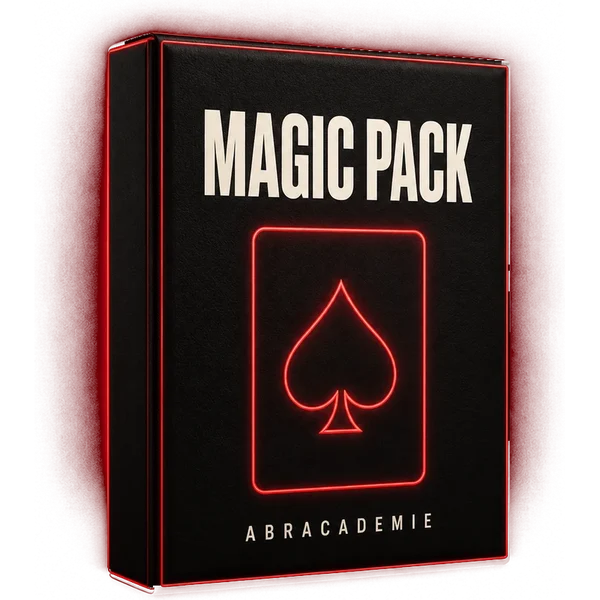 Magic PackThe most complete pack to learn magic and mentalism, even if you’re starting from zero.Discover the Magic Pack
Do you need a degree? Is there an age to become a magician?
Do you need a degree to be a magician?
No. You don’t need any degree to do magic, whether as an amateur or for a living. What matters to a client is what they see: your act, your presentation, your videos, the reviews of the people you’ve performed for.
There are clubs, schools and courses, and they can help you progress a lot. But none of them is required. Many magicians learned on their own, with books, videos and tons of practice.
Can you become a magician at 15?
Yes, and it’s actually a great age to start. At 15 you have time to practice, and you can already do your tricks with family, with friends or at parties. If you want to get paid to perform one day, talk to your parents: the rules for a minor aren’t the same as for an adult.
What about becoming a magician as an adult?
Just as possible. You can perfectly well start at 30, at 40 or later. Adults often learn fast, because they know how to get organized and are comfortable talking to people. There’s no age limit for learning magic, or for performing it.
How do you become a professional magician?
If you want to make a living from magic one day, these are the steps. I’m staying general on purpose: the exact paperwork depends on your situation and your country, so check with the official agencies or an accountant before you dive in.
Land your first gigs
The first paid gigs usually come from the people around you. A friend throwing a birthday party, a coworker getting married, an acquaintance who has a restaurant or a bar. Corporate parties tend to come a bit later, when you already have experience and something to show for it.
For your first times, choose gigs where you feel comfortable, with your most polished act. Every gig that goes well brings you experience, videos and word of mouth.
Make it official
As soon as you get paid, you have to declare your activity. There are several ways to do it, depending on your situation and the type of gig. Don’t rush in blindly: take the time to get informed and choose the option that suits you best.
Get insurance
When you perform at clients’ homes or in public places, insurance that covers your activity is a serious precaution. Some clients, especially companies, may ask you for it.
Make yourself known
A client wants to see you before hiring you. At first, a simple website or a social media account is enough, with a short promo video: a few clips of your best moments and the reactions of real spectators. Add what you offer, for what kind of event, and how to contact you.
Set your prices
Your rates depend on your experience, the type of event, the length and the location. You charge less at first, and then raise your prices as you gain experience and requests come in. Look at what magicians at your level charge around you, and don’t undersell yourself: a gig also includes all the preparation time behind it.
Get guidance
Going pro raises lots of questions at once: the repertoire, the show, the clients, the marketing. On your own, it takes years to find the answers. That’s why, with Hiro, we created a one-year mentoring program to become a professional magician.
Hiro is one of the best magicians in France today, and one of the most in demand. A professional magician and lecturer for more than 20 years, he has worked for Yves Saint Laurent, L’Oréal, Chanel, Mercedes and Paris Saint-Germain, and has performed for Tony Parker, Gaël Monfils and Matt Pokora. For a year, he passes on what makes the difference between an amateur and a magician clients fight over.
What you get: more than 300 professional training videos, private one-on-one and group sessions, ready-to-use shows, what goes on behind the scenes at real gigs, help creating your brand (website, logo, social media), WhatsApp support for all your questions, in-person meetups and a certification at the end.
It’s a demanding program, not just another course. Spots are very limited and only for people over 18: selection happens on a call where we talk about your profile and your motivations. If you really want to become a magician, send your application.
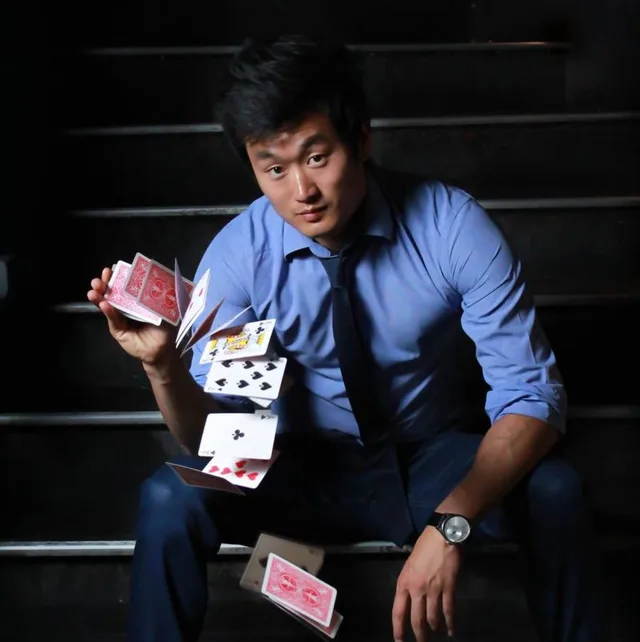 One-year mentoring · very limited spotsBecome a professional magician with HiroHiro is one of the most in-demand magicians in France: Yves Saint Laurent, Chanel, L’Oréal, PSG… With him and Maxime, you have one year to become a professional magician. Students are selected on a call.Send my application
Your path to becoming a magician starts with a deck of cards
Being a magician isn’t a gift reserved for a few. It’s a path: learn the basics, build a few strong tricks, practice, perform for real people, put together your act, film yourself, listen to feedback. You don’t need a degree, and there’s no age to start. If you want to become a professional magician, the business side comes next: making it official, getting insurance, making yourself known and setting your prices.
If you’re aiming for a career, don’t wait: apply for your spot in the mentoring program with Hiro, spots go fast. If you’d rather explore first, start with my free course: 7 professional tricks on video, which you receive all at once. To move on to truly complete training, discover the Magic Pack to learn magic from A to Z, or take a look at all my online magic courses.
Frequently asked questions
Is there a mentoring program to become a professional magician?
Yes. With Hiro, one of the best magicians in France, Abracademy guides future professional magicians for a year: training videos, private and group sessions, ready-to-use shows, the creation of your brand and a certification. Spots are very limited and selection happens on a call, after you send your application.
How do you become a magician from zero?
Start with tricks that work by themselves, then learn your first card techniques one by one. Build a small repertoire of three to five well-mastered tricks, show them to real people and then put them together into an act. Consistency counts more than talent.
Do you need a degree to become a magician?
No. You don’t need any degree to practice magic, as an amateur or as a professional. Clubs, schools and courses help you progress, but what convinces a client is your act and your videos.
How long does it take to become a magician?
You can do your first trick the same day. Having a few solid tricks takes a few weeks of regular practice, and holding a real act in front of strangers takes months, often longer. There’s no fixed timeline for going pro.
Can you become a magician at 15?
Yes, it’s a great age to start. You can learn, practice and do your tricks with family or friends. To get paid to perform, talk to your parents first, because the rules aren’t the same for a minor.
Is it too late to become a magician as an adult?
No, there’s no age limit. You can start as an adult and progress quickly, because adults know how to get organized and talk to people. A few minutes of practice a day is enough to get going.
How do you get your first paid gigs as a magician?
The first gigs usually come from the people around you: birthdays, weddings, restaurants or bars. Prepare a short promo video and a simple page on a website or social media. Every gig that goes well brings you word of mouth.
One-year mentoring · very limited spotsBecome a professional magician with HiroHiro is one of the most in-demand magicians in France: Yves Saint Laurent, Chanel, L’Oréal, PSG… With him and Maxime, you have one year to become a professional magician. Students are selected on a call.Send my application